

Zineryt Lotion
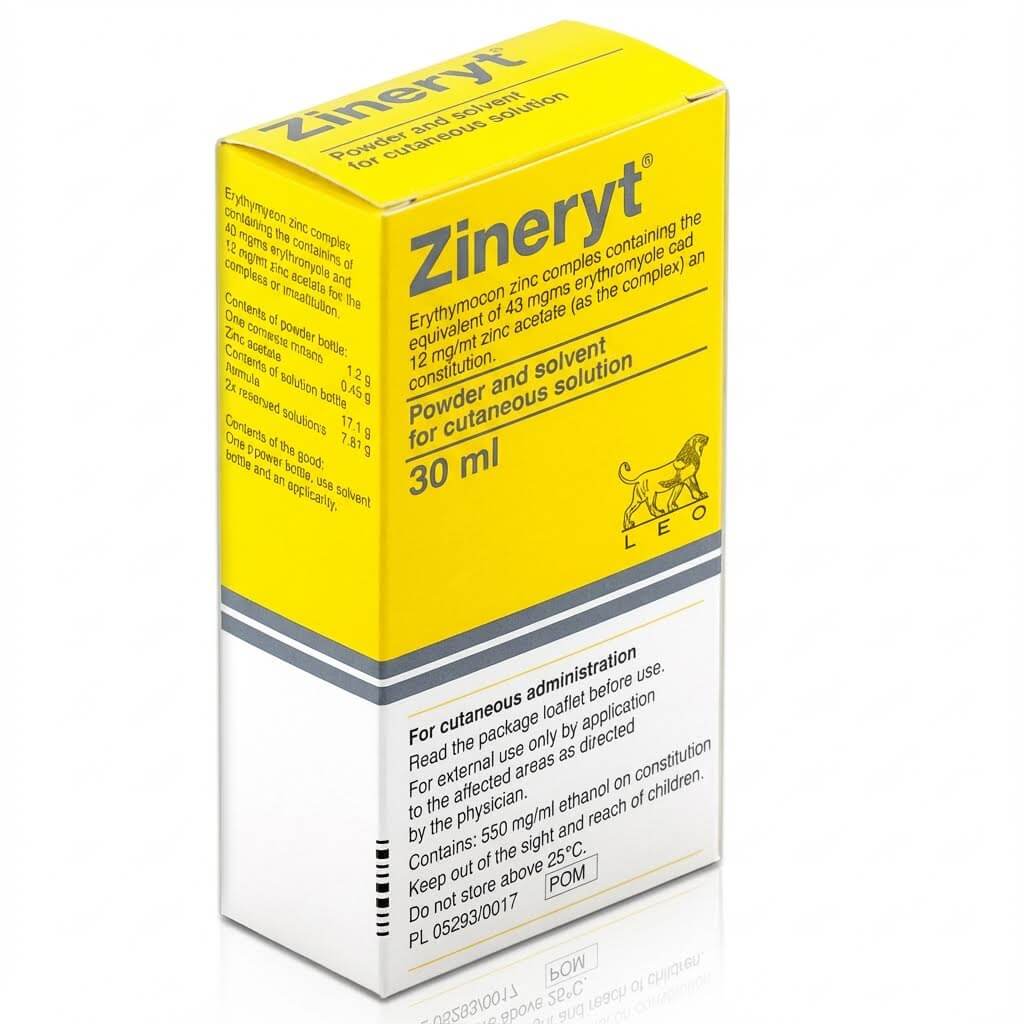
Zineryt® (erythromycin 40mg/ml + zinc acetate 12mg/ml) is a prescription-only topical solution for treating acne vulgaris. This dual-action treatment combines antibiotic properties with zinc's anti-inflammatory effects to combat pimples, blackheads, and inflammatory acne lesions. Available through Chemist Doctor's regulated online service following a consultation with UK-licensed clinicians.
You must complete a short online consultation so that our prescriber can ensure that the treatment is suitable for you.
| Product Name: | Zineryt Topical Solution |
|---|---|
| Manufacturer: | LEO Pharma A/S |
| Active Ingredient: | Erythromycin + Zinc acetate |
| Administration: | Topical (cutaneous use only) |
| Presentation: | Powder and solvent for cutaneous solution |
| Available Strengths: | 40mg/ml erythromycin + 12mg/ml zinc acetate |
| Prescription Required: | Yes - POM |
| Dosage: | Twice daily (morning and evening) |
| Suitable for pregnancy? | Can be used with caution |
| Use with alcohol: | No known interactions |
| Strength | Package Type | Current Price |
|---|---|---|
| 30ml pre-mixed | 30ml bottle | £17.99 |
| 60ml pre-mixed | 60ml bottle | £34.99 |
| 90ml pre-mixed | 90ml bottle | £52.99 |
| Zineryt is a topical antibiotic solution for acne treatment. It belongs to the drug class of macrolide antibiotics combined with zinc salts. Please consult with your healthcare provider before starting this medication. | ||
| This treatment requires an online consultation for review by our medical team. The decision to supply the specific treatment and quantity requested will be based on whether our medical team are satisfied that it will be safe, appropriate, and effective. | ||
Swipe left or right to view more information
Table of Contents
- What is Zineryt?
- What is Zineryt Used For?
- Before Using Zineryt
- Zineryt Contraindications
- Special Population Considerations
- Zineryt and Other Medicines
- Pregnancy & Breastfeeding
- Driving & Machine Operation
- Zineryt Ingredients
- How to Use Zineryt
- Zineryt Dosage Guidelines
- Administration Instructions
- Missed Dose Management
- Overdose Information
- Zineryt Side Effects
- How to Store Zineryt
- Zineryt Pack Information
- Zineryt FAQs
What is Zineryt?
Zineryt is a topical antibiotic solution containing two active ingredients: erythromycin (40mg/ml) and zinc acetate dihydrate (12mg/ml). It belongs to the pharmacological class of macrolide antibiotics combined with zinc salts, formulated specifically for cutaneous application in acne treatment.
Mechanism of Action
Zineryt works through a dual-action mechanism to combat acne vulgaris:
- Antibacterial Action: Erythromycin, a macrolide antibiotic, inhibits protein synthesis in Cutibacterium acnes (formerly Propionibacterium acnes), the primary bacteria involved in acne pathogenesis. By reducing bacterial proliferation, it decreases inflammatory responses in hair follicles.
- Anti-inflammatory & Sebostatic Effects: Zinc acetate exhibits anti-inflammatory properties and helps regulate sebum production. Zinc also enhances erythromycin's stability and penetration into the skin while potentially reducing the development of antibiotic resistance.
Think of Zineryt as a targeted team: erythromycin acts like a specialized cleaner that removes acne-causing bacteria, while zinc functions as a maintenance crew that soothes inflammation and creates a less hospitable environment for future breakouts.
Biological Pathway Explanation
Acne develops when hair follicles become clogged with excess sebum and dead skin cells, creating an ideal environment for C. acnes proliferation. These bacteria trigger immune responses that result in inflammation, redness, and pus formation. According to the NHS acne treatment guidelines, topical antibiotics like Zineryt are first-line treatments for inflammatory acne. Zineryt intervenes at multiple points:
- Erythromycin penetrates the follicular opening and binds to bacterial ribosomes (50S subunit), disrupting protein synthesis and inhibiting bacterial growth
- Zinc modulates the inflammatory response by inhibiting neutrophil chemotaxis and reducing pro-inflammatory cytokines
- The combination helps normalize follicular keratinization and reduces comedone formation
What is Zineryt Used For?
Zineryt is indicated for the topical treatment of acne vulgaris, particularly in cases of mild to moderate inflammatory acne. This includes various acne manifestations:
| Acne Type | Description | How Zineryt Helps |
|---|---|---|
| Comedonal Acne | Blackheads and whiteheads (non-inflammatory) | Prevents progression to inflammatory lesions |
| Papulopustular Acne | Red bumps and pus-filled pimples | Reduces bacteria and inflammation |
| Mild Inflammatory Acne | Multiple red, inflamed lesions | Combats bacterial overgrowth and calms skin |
Target Patient Populations
Zineryt is suitable for:
- Adolescents and adults with mild to moderate acne vulgaris
- Patients who haven't responded adequately to over-the-counter treatments (e.g., benzoyl peroxide, salicylic acid)
- Individuals who cannot tolerate or prefer to avoid oral antibiotics
- Patients requiring combination therapy (can be used alongside other topical treatments except those containing clindamycin)
Important Safety Notice:
EMERGENCY NOTE: Zineryt is for external use only. If accidentally swallowed, seek immediate medical attention. Avoid contact with eyes, mouth, and mucous membranes. If contact occurs, rinse thoroughly with water for several minutes.
Before Using Zineryt
Before starting Zineryt treatment, a proper medical assessment should be conducted:
Medical History Assessment Checklist
- History of allergic reactions to erythromycin, zinc, or other macrolide antibiotics
- Previous adverse reactions to topical acne medications
- History of antibiotic-associated colitis or gastrointestinal issues
- Existing skin conditions (eczema, rosacea, seborrheic dermatitis)
- Current use of other topical or systemic acne treatments
Pre-treatment Considerations
Before initiating Zineryt therapy:
- Cleanse the affected area with a gentle, non-medicated cleanser
- Ensure skin is completely dry before application
- Perform a patch test on a small area if you have sensitive skin or history of allergies
- Discontinue any potentially irritating skincare products (abrasive scrubs, alcohol-based toners)
Zineryt Contraindications
| Type | Contraindication | Risk Level |
|---|---|---|
| Absolute | Hypersensitivity to erythromycin, zinc acetate, or any excipients | High - Avoid completely |
| Absolute | Allergy to other macrolide antibiotics (azithromycin, clarithromycin) | High - Avoid completely |
| Relative | Severe cystic or nodular acne (may require systemic treatment) | Moderate - Consult specialist |
| Relative | Extensive eczema or broken skin in treatment area | Moderate - Use with caution |
Risk Stratification
High Risk (Absolute Contraindications): Patients with known hypersensitivity should not use Zineryt under any circumstances due to risk of severe allergic reactions including anaphylaxis.
Moderate Risk (Relative Contraindications): May require medical supervision, dosage adjustment, or additional monitoring if benefits outweigh risks.
Special Population Considerations
Elderly Patients
No specific dosage adjustment is necessary for elderly patients, but age-related skin fragility may require gentler application.
Renal/Hepatic Impairment
Since Zineryt has minimal systemic absorption, renal or hepatic impairment does not typically require dosage adjustment. However, severe hepatic impairment warrants caution.
Pediatric/Adolescent Patients
Zineryt is approved for use in adolescents (typically 12 years and older). For children under 12, limited data exist, so use should be under medical supervision.
Zineryt and Other Medicines
Systemic drug interactions are unlikely due to minimal absorption. However, consider the following:
Topical Medication Interactions
- Other topical antibiotics (especially clindamycin): Concurrent use may increase risk of cross-resistance
- Topical retinoids (tretinoin, adapalene): May increase skin irritation - apply at different times of day
- Benzoyl peroxide: Can potentially inactivate erythromycin - use at least 1 hour apart
- Abrasive or drying agents: May exacerbate skin irritation
Timing Recommendations
If using multiple topical treatments:
- Apply Zineryt first, allow to dry completely (5-10 minutes)
- Wait at least 1 hour before applying other topical medications
- Consider using Zineryt in the morning and retinoids at night to minimize interactions
Pregnancy & Breastfeeding
Pregnancy
Zineryt may be used during pregnancy if clearly needed. Topical application results in minimal systemic absorption, reducing fetal exposure. However, always consult your doctor before using any medication during pregnancy.
Breastfeeding
Zineryt can be used while breastfeeding, but avoid application to the chest area to prevent accidental ingestion by the infant. Wash hands thoroughly after application.
Important: While Zineryt is generally considered safe during pregnancy and breastfeeding, the decision should be made in consultation with a healthcare professional who can assess individual risk-benefit considerations.
Driving & Machine Operation
- Zineryt has no known effects on the ability to drive or operate machinery
- The topical application and minimal systemic absorption mean it doesn't cause drowsiness, dizziness, or impaired judgment
- Warning Signs: If you experience unusual dizziness or visual disturbances after application (potentially due to accidental eye contact), avoid driving until symptoms resolve
Zineryt Ingredients
| Ingredient | Type | Function |
|---|---|---|
| Erythromycin | Active | Macrolide antibiotic that inhibits bacterial protein synthesis |
| Zinc acetate dihydrate | Active | Anti-inflammatory, reduces sebum production, stabilizes erythromycin |
| Di-isopropyl sebacate | Excipient | Solvent and penetration enhancer |
| Ethanol | Excipient | Solvent and antiseptic properties |
Allergen Information
Contains ethanol. May cause skin reactions in individuals with extreme alcohol sensitivity. Not suitable for patients with known hypersensitivity to any component. For complete ingredient information, refer to the official Zineryt SMPC.
How to Use Zineryt
Proper application is crucial for effectiveness and minimizing side effects:
Step-by-Step Administration
- Preparation: Wash your hands and the affected skin area with a mild cleanser. Pat dry completely.
- Bottle Preparation: Your pharmacist will have prepared the solution by mixing the powder and solvent. Ensure the applicator cap is securely attached.
- Application: Remove the protective cap. Hold the bottle upside down and place the applicator pad against the skin.
- Spreading: Gently spread the solution over the entire affected area, including a small margin of surrounding skin.
- Pressure Control: Increase pressure slightly if solution flow is inadequate, but avoid excessive pressure.
- Drying: Allow the solution to dry completely (approximately 5-10 minutes) before applying makeup or other products.
- Cleanup: Replace the cap firmly. Wash hands after application unless treating hands.
Zineryt Dosage Guidelines
| Patient Group | Frequency | Application Area | Typical Duration |
|---|---|---|---|
| Adults & Adolescents (12+) | Twice daily (morning & evening) | Whole affected area + surrounding skin | 10-12 weeks initially |
| Maintenance Therapy | Once daily or as directed | Previously affected areas | As needed, under medical supervision |
Titration Schedule for Sensitive Skin
| Week | Frequency | Notes |
|---|---|---|
| 1 | Once daily (evening) | Monitor for irritation |
| 2+ | Twice daily | If well-tolerated in week 1 |
| If irritation occurs | Reduce to once daily | Until irritation subsides |
Administration Instructions
Special Application Considerations
- Makeup: Apply Zineryt first, allow to dry completely, then apply non-comedogenic makeup
- Moisturizers: Apply after Zineryt has dried; choose oil-free, non-comedogenic formulas
- Sunscreen: Essential during treatment; apply as the final step in your skincare routine
- Avoid: Eyes, nostrils, mouth, mucous membranes, and broken skin
Common Application Mistakes to Avoid
- Applying to wet skin (reduces absorption and effectiveness)
- Using excessive pressure (can cause irritation without improving efficacy)
- Spot treating only (Zineryt should be applied to entire affected areas)
- Not allowing proper drying time before applying other products
- Using expired or improperly stored solution
Missed Dose Management
| Time Since Missed Dose | Action |
|---|---|
| Less than 3 hours | Apply as soon as remembered |
| More than 3 hours until next dose | Skip missed dose, apply at next scheduled time |
| Consistently missing doses | Set reminders; consistency is key for acne treatment |
Important: Do not apply a double dose to make up for a missed application. This may increase irritation without improving efficacy.
Overdose Information
Topical Overapplication
If too much Zineryt is applied, blot excess with a clean tissue. Wash the area if irritation occurs.
Accidental Ingestion
Swallowing Zineryt may cause symptoms similar to alcohol intoxication (due to ethanol content). If ingested:
- Do not induce vomiting
- Rinse mouth with water
- Seek immediate medical attention or contact Poison Control
- Bring the medication package for identification
Zineryt Side Effects
Frequency-Based Categorization
| Frequency | Side Effect | Management |
|---|---|---|
| Very Common (≥1/10) | Temporary stinging, slight redness at application site | Usually subsides within minutes; if persistent, reduce frequency |
| Common (≥1/100 to <1/10) | Dryness, peeling, itching | Use non-comedogenic moisturizer; if severe, consult doctor |
| Uncommon (≥1/1,000 to <1/100) | Increased sensitivity to sunlight, skin irritation | Use sunscreen daily; if severe, discontinue and consult doctor |
| Rare (≥1/10,000 to <1/1,000) | Allergic reactions (rash, swelling, difficulty breathing) | Discontinue immediately; seek emergency medical attention |
SERIOUS SIDE EFFECTS - IMMEDIATE ACTION REQUIRED:
Contact a doctor immediately if you experience: severe skin reaction with redness, scaling, bumps under skin and blisters; swelling of face, lips, tongue or throat; difficulty breathing; severe dizziness. These may be signs of a serious allergic reaction requiring immediate medical intervention.
Reporting Side Effects
If you experience any side effects, report them to your doctor, pharmacist, or nurse. You can also report directly via the UK Yellow Card Scheme at www.mhra.gov.uk/yellowcard. Reporting helps improve medication safety for everyone.
How to Store Zineryt
Storage Conditions
- Storage Temperature: Do not store above 25°C
- After Preparation: Use within 8 weeks of preparation by pharmacist
- Original Packaging: Keep in original container with cap tightly closed
- Away from: Direct sunlight, heat sources, and moisture
- Keep out of reach of children and pets
Disposal Protocols
Do not dispose of medications via wastewater or household waste. Return unused or expired Zineryt to your pharmacy for proper disposal. This helps protect the environment and prevents accidental ingestion.
Pack Information
Zineryt is supplied as powder and solvent that must be mixed by a pharmacist before dispensing:
| Pack Size | Contents | Approximate Usage Duration |
|---|---|---|
| 30ml (when made up) | 1 bottle of powder, 1 bottle of solvent, applicator with cap | Approximately 4-6 weeks (twice daily use) |
| 90ml (when made up) | 1 bottle of powder, 1 bottle of solvent, applicator with cap | Approximately 12-15 weeks (twice daily use) |
Product Information
Marketing Authorisation Holder: Neon Healthcare Ltd., 8 The Chase, John Tate Road, Hertford, SG13 7NN, United Kingdom
Manufacturer: LEO Pharma A/S, Industriparken 55, DK-2750 Ballerup, Denmark
Product Licence Number: PL 65635/0005
Where Can I Buy Zineryt Online in the UK
Secure Zineryt Prescription & Fast Delivery Service
Order Zineryt with confidence through our UK-registered medical prescribers, who review all requests within 4 working hours. We guarantee same-day prescription approval for eligible patients and dispatch orders placed before 3pm for next-day tracked delivery.
Our Zineryt service combines competitive pricing with strict adherence to MHRA safety standards, ensuring your medication is dispensed through GPhC-registered pharmacies. Every purchase includes discreet packaging and a GDPR-compliant consultation process.
Our clinical team ensures:
- Comprehensive medical history review
- Acne severity assessment
- Drug interaction checks
- Personalised application guidance
Always consult your GP before starting acne treatment. Not recommended for children under 12 or those with known hypersensitivity to erythromycin or zinc.
Zineryt (Erythromycin & Zinc) FAQs
How long does it take for Zineryt to work on acne?
Most patients begin to see improvement within 4-8 weeks of consistent use. Full therapeutic effect typically occurs after 10-12 weeks of treatment. Initial worsening of acne may occur in the first few weeks as underlying comedones surface—this is normal and indicates the medication is working.
Can I use Zineryt with other acne treatments?
Zineryt can be combined with some other acne treatments, but timing is important. Avoid using with topical clindamycin due to cross-resistance concerns. With topical retinoids or benzoyl peroxide, apply Zineryt first, allow to dry completely, then apply the other product. Oral antibiotics may be combined under medical supervision. Always consult your doctor before combining treatments.
What should I do if Zineryt causes skin irritation?
Mild stinging or redness immediately after application is common and usually subsides quickly. If irritation persists or worsens: 1) Reduce application to once daily, 2) Apply a gentle, non-comedogenic moisturizer after Zineryt dries, 3) Avoid other potentially irritating products, 4) If severe irritation develops, discontinue use and consult your doctor. Some patients with sensitive skin benefit from a gradual introduction (once daily for the first week).
Can Zineryt be used on body acne?
Yes, Zineryt can be used on body acne affecting the back, chest, or shoulders. The applicator pad makes it suitable for larger areas. For hard-to-reach areas, you may apply with a cotton pad instead. Ensure the skin is clean and dry before application. Avoid using on broken skin or severe cystic acne on the body without medical supervision.
How does Zineryt compare to other topical antibiotics for acne?
Zineryt offers two advantages: 1) The combination of erythromycin with zinc acetate may reduce the development of bacterial resistance compared to erythromycin alone, 2) Zinc provides additional anti-inflammatory benefits. Compared to clindamycin, erythromycin has a broader spectrum but similar efficacy for acne. Zineryt's liquid formulation may be preferred over creams by some patients for ease of application to larger areas.
Is Zineryt suitable for hormonal acne?
Zineryt can help manage inflammatory lesions associated with hormonal acne but doesn't address the underlying hormonal cause. It's often used as part of a comprehensive treatment plan that may include hormonal therapies (like oral contraceptives or spironolactone) for women with hormonal acne. Consult a dermatologist for a tailored approach to hormonal acne management.
What happens if I stop using Zineryt abruptly?
Stopping Zineryt abruptly may lead to recurrence of acne as the medication's antibacterial and anti-inflammatory effects are withdrawn. For best results, complete the full course as prescribed (typically 10-12 weeks). If maintenance therapy is needed, your doctor may recommend reducing frequency rather than stopping completely. Never stop medication without consulting your healthcare provider.
Can Zineryt bleach clothing or bedding?
Zineryt contains ingredients that typically don't bleach fabrics, but as with any topical solution, it's advisable to allow it to dry completely before contact with clothing or bedding. The ethanol content may cause temporary discoloration on some delicate fabrics if applied while still wet. To prevent transfer, wait 10-15 minutes after application before dressing.
Does Zineryt make skin more sensitive to the sun?
Erythromycin can potentially increase photosensitivity in some individuals. While this side effect is uncommon with Zineryt, daily sunscreen use is recommended during treatment. Choose a broad-spectrum, non-comedogenic sunscreen with SPF 30 or higher. Apply sunscreen as the final step in your skincare routine after Zineryt has completely dried.
Can I use moisturizer with Zineryt?
Yes, moisturizer is recommended, especially if you experience dryness or peeling. Apply Zineryt first to clean, dry skin. Wait 5-10 minutes for it to dry completely, then apply an oil-free, non-comedogenic moisturizer. Look for products labeled "non-comedogenic" or "oil-free" to avoid clogging pores. Moisturizing can improve treatment adherence by reducing side effects.

Medical Content Manager
Nabeel is a co-founder, and medical content manager of Chemist Doctor. He works closely with our medical team to ensure the information is accurate and up-to-date.

Medical Doctor
Dr. Talal is a GMC registered doctor and medical reviewer at Chemist Doctor. He ensures clinical accuracy and reliability across health content.

Medical Director
Usman is a co-founder, and medical director of Chemist Doctor. He leads the organisation's strategic vision, bridging clinical and operational priorities.
Review Date: 01 January 2026
Next Review: 01 July 2026
Published on: 01 January 2026
Last Updated: 01 January 2026
Getting your medication is quick and easy with our simple 4-step process:
Start Consultation
Complete our brief health questionnaire about your medical history and current health.
Medical Review
UK-registered clinicians review your consultation for safe prescribing.
Pharmacy Processing
If approved, our partner pharmacy prepares your medication.
Fast Dispatch
Your order is dispatched via your chosen delivery method.
What does the online consultation involve?
You'll answer questions about your medical history and current health to ensure safe prescribing. Honest responses are vital for your safety.
How do I reorder medication?
Use the login details emailed after your first order to access your account and reorder.
How does the secure chat portal work?
Clinicians may contact you via your account's chat portal to discuss your treatment. Respond securely within your account.
At Chemist Doctor, we respect your privacy and ensure complete discretion at every step.
Discreet Packaging
All orders are sent in tamper-evident, plain white boxes sealed within anonymous grey mailing bags.
Secure Data
Your personal and medical information is kept strictly confidential with SSL encryption.
Private Consultations
All consultations are conducted privately by UK-registered clinicians.
Anonymous Billing
Credit card statements show a neutral descriptor with no reference to medications.
Will my GP be informed about my order?
Only with your consent. We recommend updating your GP directly for seamless care.
We offer two reliable delivery options to suit your needs:
| Service Type | Delivery Speed | Order Cut-off | Carrier |
|---|---|---|---|
| Standard Delivery | 2-3 business days | No cut-off | Royal Mail |
| Premium Next-Day Delivery | Next business day | 3 PM weekdays | Royal Mail 24 |
Next-day delivery guarantee applies to orders approved before 3 PM to these regions:
- England
- Scotland
- Wales
- Northern Ireland
Service Restrictions: We currently cannot deliver to: Republic of Ireland, Continental Europe, USA, or Canada
Is packaging discreet?
Yes. All orders are shipped in plain, unmarked packaging via tracked courier services.
Do I need to stay home for delivery?
No. You'll receive a tracking number to monitor your parcel's progress.
Do you deliver on weekends or bank holidays?
Deliveries occur Monday–Friday only. We do not ship on weekends or UK bank holidays.
What should I do if my order hasn't arrived?
Use your tracking number to locate the parcel or contact our support team for assistance.
Can I receive delivery updates via SMS?
Yes. Provide your mobile number at checkout for courier updates. We will not use it for marketing purposes.
Credit/Debit Cards
Visa, Mastercard, Maestro, American Express
Secure 3D authentication
Google Pay/Apple Pay
Quick checkout using your mobile payment methods
Enhanced security with tokenisation
Pay in 3 by Klarna UK
3 interest-free payments
Pay in 3 instalments
Subject to eligibility checks
We use SSL encryption and PCI DSS compliance to secure transactions. Learn more in our Privacy Policy.
How long do refunds take to process?
Card payments: Refunds appear in 3–5 days.
Klarna payments: Refunds are processed through Klarna and will be adjusted across your remaining instalments.
Why was my order declined?
Declined orders are not charged. Card authorisations release funds within 3–5 days (contact your bank for details).
Can I return prescription medication?
No. UK law prohibits returns of dispensed prescription treatments for safety reasons.
How does Pay in 3 by Klarna UK work?
Pay in 3 by Klarna UK allows you to split your purchase into 3 equal payments. The first payment is made at checkout, with the remaining two payments automatically collected every 30 days. There are no interest or fees when you pay on time. Klarna UK is a fully regulated credit provider.
Reviews being updated...
Have you used our services? Share your experience