

Otigo Ear Drops
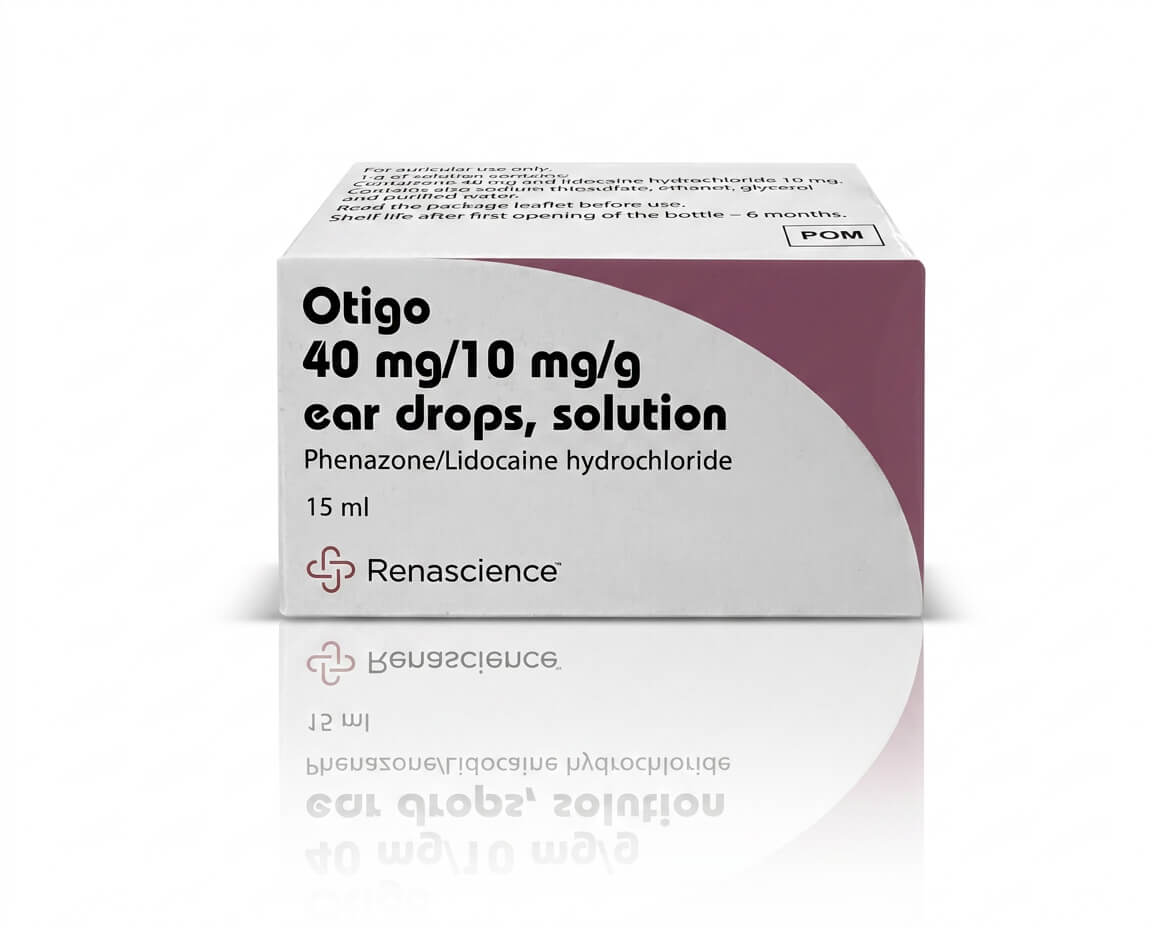
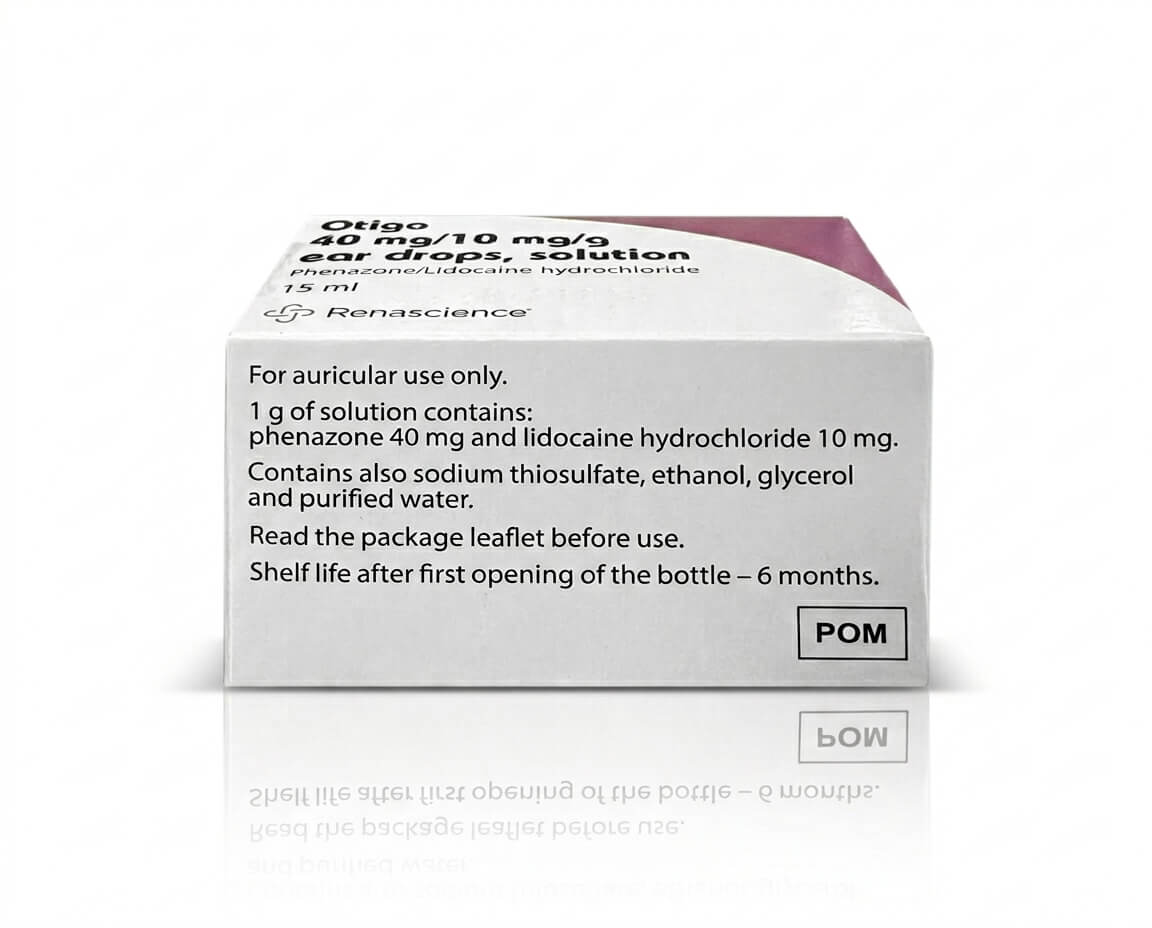
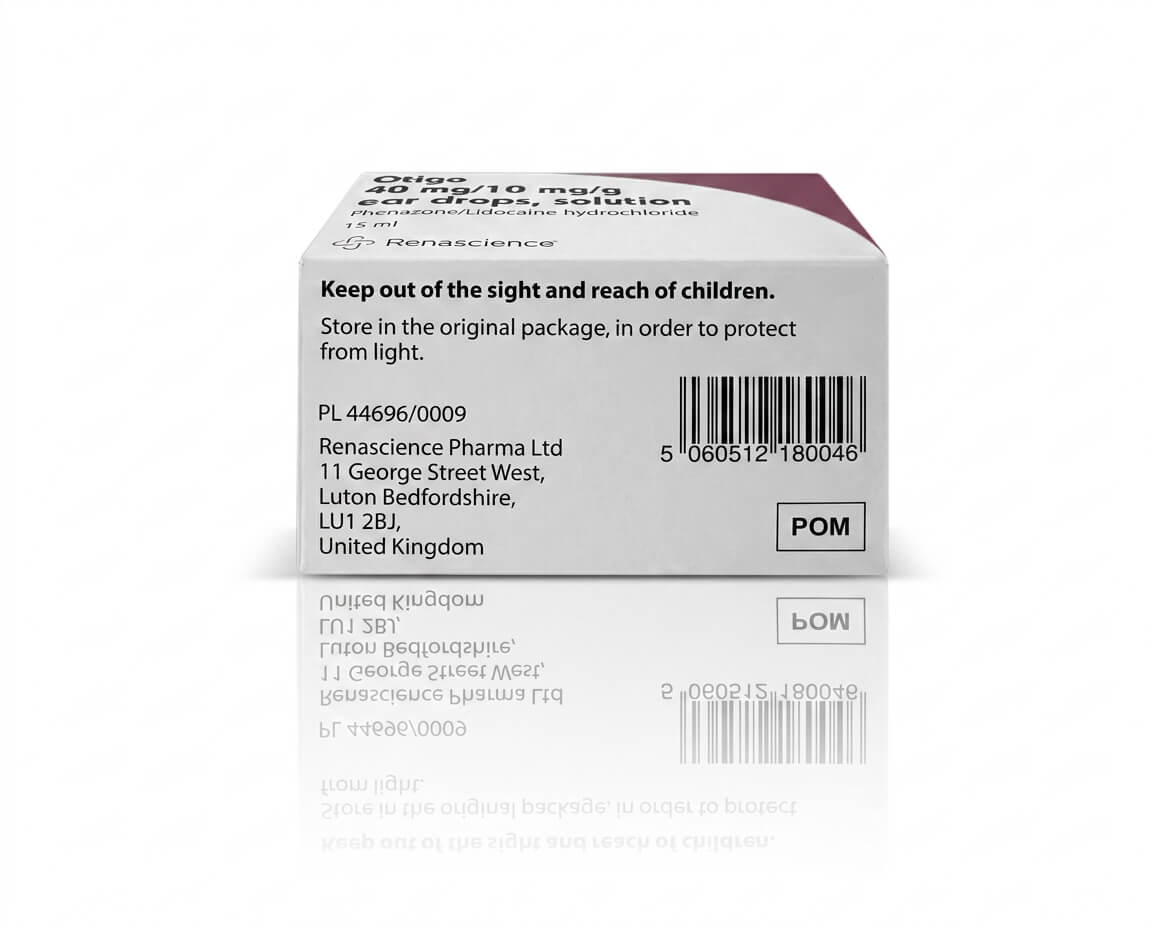
Otigo ear drops contain phenazone and lidocaine hydrochloride, providing rapid analgesic and local anaesthetic relief for painful middle ear infections. Used for acute otitis media, barotraumatic otitis, and post‑flu ear complications. Learn more about ear infection treatments and how Otigo can help alleviate ear pain safely.
Select Strength & Formulation:
| Product Name: | Otigo 40 mg/10 mg per g ear drops, solution |
|---|---|
| Manufacturer: | Renascience Pharma Limited |
| Active Ingredients: | Phenazone, Lidocaine hydrochloride |
| Administration: | Auricular (ear canal) |
| Presentation: | Clear, colourless to yellow‑brown solution |
| Available Strength: | 15ml bottle (40 mg phenazone/10 mg lidocaine HCl per gram) |
| Prescription Required: | Yes |
| Dosage: | 4 drops, 2 or 3 times daily |
| Suitable for pregnancy? | Yes, if necessary |
| Use with alcohol: | No known interaction |
| Link to Patient Information Leaflet: | Otigo PIL |
| Dose & Formulation | Package | Current Price |
|---|---|---|
| 15ml bottle | 1 x 15ml pack | £18.49 |
| 15ml bottle (2 packs) | 2 x 15ml packs | £36.98 £36.98 |
| Otigo ear drops contain phenazone (analgesic/anti‑inflammatory) and lidocaine (local anaesthetic). For local symptomatic treatment of acute otitis media, barotraumatic otitis, and post‑flu middle ear inflammation without tympanic perforation. | ||
| This treatment requires an online consultation for review by our medical team. The decision to supply the specific treatment and quantity requested will be based on whether our medical team are satisfied that it will be safe, appropriate, and effective. | ||
Swipe left or right to view more information
Table of Contents
- What is Otigo?
- What is Otigo Used For?
- Before Using Otigo
- Otigo Contraindications
- Special Population Considerations
- Otigo and Other Medicines
- Pregnancy & Breastfeeding
- Driving & Machine Operation
- Otigo Ingredients
- How to Use Otigo
- Otigo Dosage Guidelines
- Administration Instructions
- Missed Dose Management
- Overdose Information
- Otigo Side Effects
- How to Store Otigo
- Otigo Pack Information
- Otigo FAQs
What is Otigo?
Otigo ear drops are a prescription‑only medicine containing two active ingredients: phenazone (an analgesic and anti‑inflammatory) and lidocaine hydrochloride (a local anaesthetic). They are formulated to provide rapid relief of pain and inflammation in the middle ear, without the need for systemic absorption.
Active Ingredients and Drug Class
Phenazone is a pyrazolone derivative with analgesic and anti‑inflammatory properties. Lidocaine hydrochloride is an amide‑type local anaesthetic that blocks voltage‑gated sodium channels, preventing nerve impulse conduction and producing reversible loss of sensation in the ear canal and middle ear.
Mechanism of Action with Patient-Friendly Analogies
Think of an ear infection as a “storm” inside your middle ear – the lining becomes swollen and sends constant pain signals. Otigo works like a firefighter and a repair crew: phenazone calms the inflammation (reduces swelling), while lidocaine temporarily “numbs” the pain signals so your brain no longer feels the sharp, throbbing discomfort. Together they provide fast, local relief without affecting the rest of your body.
More specifically, Otigo works by:
- Phenazone inhibiting prostaglandin synthesis, reducing inflammation and pain in the middle ear mucosa.
- Lidocaine blocking sodium ion channels on nerve endings, preventing depolarisation and pain transmission.
- Combined action provides both aetiological (anti‑inflammatory) and symptomatic (anaesthetic) relief.
- Local application delivers high concentration directly to the site of pain with minimal systemic absorption.
Biological Pathway Explanation
In acute otitis media, bacterial or viral infection triggers release of inflammatory mediators (prostaglandins, cytokines) leading to mucosal oedema, exudate, and pressure‑induced pain. Phenazone reduces these mediators. Lidocaine rapidly diffuses through the intact tympanic membrane (when not perforated) or through the inflamed mucosa, reversibly binding to voltage‑gated sodium channels and stabilising the neuronal membrane, thus preventing pain signal propagation along the auditory nerve.
What is Otigo Used For?
Otigo is indicated for local symptomatic treatment and relief of pain in the following middle ear diseases, provided the tympanic membrane (ear drum) is intact and not perforated:
Approved Indications
| Condition | Description | Typical Use |
|---|---|---|
| Acute inflammation of the middle ear | Acute otitis media (AOM) with pain and redness | Relief of earache and inflammation |
| Middle ear inflammation as a complication after flu | Post‑influenza otitis media | Pain management after viral infection |
| Barotraumatic damage of the middle ear (barotraumatic otitis) | Ear pain caused by rapid pressure changes (air travel, diving) | Symptomatic relief of pressure‑related ear pain |
CRITICAL SAFETY WARNING
Do not use Otigo if your eardrum is perforated. If you have a burst eardrum, the solution may enter the middle ear and cause serious side effects, including hearing loss or damage to inner ear structures. Symptoms of perforation include sudden relief of pain followed by discharge, hearing loss, or vertigo.
If ear discharge develops during treatment, stop using Otigo immediately and tell your doctor. Consult a doctor if symptoms do not improve within 7 days or worsen at any time.
Before Using Otigo
Before starting Otigo, a thorough assessment is essential to ensure the eardrum is intact and no contraindications exist.
Medical History Assessment Checklist
Your clinician will check for:
- Known allergy to phenazone, lidocaine, or any of the excipients
- Perforated tympanic membrane (including after myringotomy)
- History of methemoglobinemia or G6PD deficiency (lidocaine risk)
- Infants under 3 months of age (higher risk of methemoglobinemia)
- Current ear discharge, drainage, or bleeding
- Recent ear surgery or ventilation tubes (grommets)
Required Baseline Tests
In most cases, a clinician will perform or confirm an otoscopic examination to verify an intact eardrum before prescribing Otigo.
Otigo Contraindications
Do not use Otigo in the following situations:
- Hypersensitivity to phenazone, lidocaine, or any excipients listed in section 6
- Perforated eardrum (tympanic perforation) – including cases where the eardrum has been perforated during surgical manipulation (myringotomy)
- Known history of methemoglobinemia or severe G6PD deficiency (relative contraindication – use only if benefits outweigh risks)
Special Population Considerations
Infants and Children
Otigo is suitable for use in children, but extra caution is needed in infants under 3 months of age due to an increased risk of methemoglobinemia with topical lidocaine. A doctor should assess the need before use.
Elderly Patients
No specific precautions beyond the general warnings; however, elderly patients may have age‑related hearing changes or tympanic membrane thinning. A medical review is recommended before first use.
Patients with G6PD Deficiency
Lidocaine has been associated with methemoglobinemia in susceptible individuals. Use only under medical supervision, and monitor for signs of hypoxia (bluish skin, shortness of breath).
Otigo and Other Medicines
Because Otigo is applied locally into the ear, systemic interactions are unlikely. However, tell your doctor or pharmacist about all medicines you use, including:
- Other ear drops (avoid concomitant use unless prescribed)
- Systemic local anaesthetics (additive risk of methemoglobinemia)
- Drugs that may induce methemoglobinemia (e.g., nitrates, dapsone, phenobarbital)
If you are using other ear preparations, separate administration by at least 30 minutes unless otherwise advised.
Pregnancy & Breastfeeding
Pregnancy Considerations
Otigo can be used by pregnant women if necessary. Systemic absorption after topical ear application is minimal, and no teratogenic effects have been reported. However, as with any medicine, use only on medical advice and for the shortest duration needed.
Breastfeeding Safety
Otigo can be used during breastfeeding. The amounts that pass into breast milk after ear administration are negligible and not expected to affect the infant. Always use as directed.
Driving & Machine Operation
Otigo does not affect the ability to drive or use machines. The drops are applied locally and do not cause drowsiness, dizziness, or central nervous system effects when used correctly with an intact eardrum.
Otigo Ingredients
Active Ingredients
- Phenazone 40 mg per gram
- Lidocaine hydrochloride 10 mg per gram
Other Ingredients (Excipients)
- Sodium thiosulfate
- Ethanol
- Glycerol
- Water for injections
The solution is clear, colourless to yellow‑brown. Contains no preservatives.
How to Use Otigo
Proper administration ensures maximum efficacy and safety.
Step-by-Step Administration Guide
- Warm the vial between your hands for a few seconds to avoid discomfort from cold solution.
- Unscrew the bottle cap and replace it with the supplied dropper applicator.
- Remove the protective dropper cap and tilt your head to one side, affected ear facing upwards.
- Turn the bottle down and gently squeeze the dropper until the required number of drops (4 drops) is dispensed into the ear canal.
- Lie flat on your side for 1‑2 minutes to allow the drops to penetrate.
- Replace the white protective dropper cap after each use.
Important Usage Tips
- Do not touch the dropper tip to the ear or any surface to avoid contamination.
- Use only in the ear – do not apply to eyes, nose, or swallow.
- Wash hands before and after administration.
Otigo Dosage Guidelines
The recommended dose is the same for adults and children.
Standard Dosage Table
| Indication | Dose | Frequency | Max Duration |
|---|---|---|---|
| Acute otitis media | 4 drops | 2‑3 times daily | 7 days (re‑evaluate if no improvement) |
| Post‑flu otitis media | 4 drops | 2‑3 times daily | |
| Barotraumatic otitis | 4 drops | 2‑3 times daily |
If symptoms worsen or do not improve within 7 days, consult your doctor – the therapy should be re‑evaluated.
Duration of Use
Treatment is intended for short‑term symptomatic relief. Do not use for longer than 7 days without medical review.
Administration Instructions
For best results, follow these additional guidelines:
- Warming the drops – hold the bottle in your hands for a minute; do not use hot water or microwave.
- Post‑administration position – remain lying on your side for 1‑2 minutes to prevent leakage.
- Do not insert anything (cotton buds, fingers) into the ear canal after applying drops.
- If using other ear preparations, wait at least 30 minutes between different drops.
Missed Dose Management
If you forget to use Otigo, apply the missed dose as soon as you remember, unless it is almost time for your next dose. In that case, skip the missed dose and continue with your regular schedule. Do not double the dose to make up for a forgotten one.
Overdose Information
When used as directed (topical ear application with an intact eardrum), overdose is unlikely. Accidental ingestion or excessive application into a perforated eardrum could lead to systemic effects of lidocaine (dizziness, confusion, seizures, methemoglobinemia). If you suspect overdose (e.g., child swallowed the drops), contact NHS 111 or go to A&E immediately.
Otigo Side Effects
Like all medicines, Otigo can cause side effects, although not everyone gets them. The following frequency is used:
Rare side effects (may affect up to 1 in 1,000 people)
- Local allergic reactions (itching, maculopapular rash)
- Auditory canal hyperaemia (redness of ear canal)
Additional potential side effects (not listed in PIL but known for lidocaine)
- Methemoglobinemia – rare but serious; signs include pale/grey‑blue skin, headache, shortness of breath
- Temporary mild stinging or burning on application
STOP USING AND SEEK MEDICAL HELP IF:
- You develop ear discharge, worsening pain, or hearing loss
- You experience signs of methemoglobinemia: skin turning blue, fatigue, confusion, rapid heart rate
- You have an allergic reaction (swelling of face/lips, difficulty breathing)
Reporting side effects: If you get any side effects, tell your doctor or pharmacist. You can also report directly via MHRA Yellow Card or search MHRA Yellow Card in app stores.
How to Store Otigo
- Keep out of the sight and reach of children.
- Store in the original package in order to protect from light.
- No special temperature storage conditions required.
- Once opened, use within 6 months.
- Do not use after the expiry date (EXP) on the carton and bottle label.
- Do not throw away any medicines via wastewater or household waste. Ask a pharmacist how to dispose of unused medicine.
Otigo Pack Information
Otigo ear drops are supplied as a clear, colourless to yellow‑brown solution in a 15 ml brown glass (Type III) bottle with a tamper‑evident screw cap. The pack includes a dropper applicator (polypropylene screw capsule/thermoplastic elastomer reservoir/low density polyethylene cap) to be fitted after first opening.
Each carton contains one bottle, a dropper applicator, and this package leaflet.
Where Can I Buy Otigo Ear Drops Online in the UK
Secure Otigo Prescription & Next-Day Delivery Service
Order Otigo with confidence through our UK‑registered clinicians, who review all requests within 4 working hours. We guarantee same‑day prescription approval for eligible patients and dispatch orders placed before 3pm for next‑day tracked delivery.
Our Otigo service combines competitive pricing with strict adherence to MHRA safety standards, ensuring your medication is dispensed through GPhC‑registered pharmacies. Every purchase includes discreet packaging and a GDPR‑compliant consultation process.
Our clinical team ensures:
- Comprehensive medical history review (including ear examination history)
- Assessment of eardrum integrity (otoscopy check)
- Drug interaction and allergy checks
- Personalised dosing guidance based on age and condition
Always consult your GP before using ear drops, especially if you have a history of eardrum perforation, ear surgery, or recurrent infections.
Otigo Ear Drops FAQs
How quickly does Otigo work for ear pain?
Lidocaine starts numbing the ear canal within 5‑10 minutes, providing noticeable pain relief. Phenazone begins reducing inflammation over the next few hours. Most patients feel significant improvement within an hour of the first dose.
Can I use Otigo if my eardrum has burst?
No. Otigo must never be used with a perforated eardrum because the solution can enter the middle ear and cause serious side effects, including hearing loss, dizziness, or damage to inner ear structures. Always confirm an intact eardrum before use.
How many days can I use Otigo ear drops?
You should use Otigo for a maximum of 7 days. If symptoms haven’t improved after 7 days or worsen at any time, stop the drops and consult a doctor, as a different treatment may be needed.
Is Otigo safe for children?
Yes, Otigo can be used in children at the same dose (4 drops 2‑3 times daily). However, extra caution is needed in infants under 3 months because of a higher risk of methemoglobinemia. Always get medical advice before using in very young babies.
Does Otigo require a prescription in the UK?
Yes, Otigo is a prescription‑only medicine (POM). You cannot buy it over the counter. At Chemist Doctor, a UK‑registered clinician will review your online consultation and issue a prescription if clinically appropriate.
Can I use Otigo while flying to prevent ear pain?
Otigo is indicated for barotraumatic otitis (pressure‑related ear pain) that has already occurred. It can be used after flight or diving to relieve symptoms, but it is not recommended as a preventive measure. Consult a doctor for prevention strategies.
What should I do if ear discharge starts during treatment?
Stop using Otigo immediately and contact your doctor. Discharge may indicate a perforated eardrum, which is a contraindication. Your clinician will assess you and recommend alternative treatment.
Can I use Otigo if I have grommets (ear tubes)?
No. Grommets create a perforation in the eardrum, so Otigo is contraindicated. Using ear drops with grommets risks middle ear infection and hearing damage. Speak to your ENT specialist for suitable ear treatments.
Is Otigo safe during pregnancy?
Yes, Otigo can be used during pregnancy if necessary. Systemic absorption is minimal, and there is no evidence of harm. However, always inform your doctor and use the shortest course needed.
Can I wear earplugs or headphones after using Otigo?
After applying Otigo, lie on your side for 1‑2 minutes. You may gently wipe away excess solution from the outer ear, but avoid inserting anything (earplugs, cotton buds) into the ear canal for at least 30 minutes to allow full absorption.
Does Otigo affect hearing tests or ear exams?
The drops may temporarily coat the eardrum, potentially affecting tympanometry or otoscopy. If you have a scheduled hearing test or ear examination, inform the clinician that you are using Otigo ear drops.
Can I use Otigo with other ear drops?
If you are using another ear medication (e.g., antibiotic drops), separate administration by at least 30 minutes. Do not mix different drops in the same application. Consult your doctor before combining treatments.
What is methemoglobinemia and should I worry?
Methemoglobinemia is a rare blood disorder where oxygen delivery is impaired. With correct use (intact eardrum, recommended dose), the risk is extremely low. It is more relevant for susceptible patients (infants <3 months, G6PD deficiency). Seek help if you develop blue‑grey skin or breathlessness.
Can Otigo be used for swimmer's ear (outer ear infection)?
No. Otigo is indicated specifically for middle ear diseases with an intact eardrum. Swimmer's ear (otitis externa) affects the ear canal and generally requires a different treatment (e.g., antibiotic/steroid drops). Consult a doctor for correct diagnosis.
Related Guides

Medical Content Manager
Nabeel is a co-founder, and medical content manager of Chemist Doctor. He works closely with our medical team to ensure the information is accurate and up-to-date.

Medical Doctor
Dr. Talal is a GMC registered doctor and medical reviewer at Chemist Doctor. He ensures clinical accuracy and reliability across health content.

Medical Director
Usman is a co-founder, and medical director of Chemist Doctor. He leads the organisation's strategic vision, bridging clinical and operational priorities.
Review Date: 24 Apr 2026
Next Review: 24 Oct 2026
Published on: 24 Apr 2026
Last Updated: 24 Apr 2026
Getting your medication is quick and easy with our simple 4-step process:
Complete Online Consultation
Fill out our secure medical questionnaire about your ear symptoms, medical history (especially eardrum status), and any current medications. This takes approximately 10 minutes.
Clinician Review
A UK-registered doctor reviews your consultation. They may request an otoscopy image or ask follow‑up questions via secure message within 24 hours.
Prescription Decision
If appropriate, the clinician will issue a prescription. If not suitable (e.g., perforated eardrum), you'll receive advice and won't be charged.
Delivery to Your Door
Our pharmacy dispenses your medication and sends it via discreet next-day delivery. You'll receive tracking information.
What does the online consultation involve?
You'll answer questions about your ear pain, recent cold or flu, history of eardrum perforation, ear surgery (grommets), and any allergies to anaesthetics.
How do I reorder?
Use the login details emailed after your first order. A new consultation may be required if symptoms have changed.
At Chemist Doctor, we respect your privacy and ensure complete discretion at every step.
Discreet Packaging
All orders are sent in tamper-evident, plain white boxes sealed within anonymous grey mailing bags.
Secure Data
Your personal and medical information is kept strictly confidential with SSL encryption.
Private Consultations
All consultations are conducted privately by UK-registered clinicians.
Anonymous Billing
Credit card statements show a neutral descriptor with no reference to medications.
Will my GP be informed about my order?
Only with your consent. We recommend updating your GP directly for seamless care, especially if you have chronic ear conditions.
We offer reliable delivery options throughout the UK:
| Service Type | Delivery Speed | Order Cut-off | Cost |
|---|---|---|---|
| Standard Delivery | 2-3 business days | 4pm | £2.99 |
| Next-Day Delivery | Next business day | 4pm | £4.99 |
| Saturday Delivery | Saturday by 1pm | Friday 2pm | £6.99 |
| Free Delivery | 2-3 business days | 4pm | FREE on orders over £40 |
Next-day delivery applies to orders approved before 3 PM to England, Scotland, Wales, and Northern Ireland.
Is packaging discreet?
Yes. All orders are shipped in plain, unmarked packaging via tracked courier services.
Do you deliver on weekends or bank holidays?
Deliveries occur Monday–Friday only. We do not ship on weekends or UK bank holidays.
Credit/Debit Cards
Visa, Mastercard, Maestro, American Express
Secure 3D authentication
Google Pay/Apple Pay
Quick checkout using your mobile payment methods
Enhanced security with tokenisation
PayPal
Pay with your PayPal balance or linked cards
PayPal Pay in 3 available (subject to eligibility)
Pay in 3 by Klarna UK
3 interest-free payments over 2 months
First payment at checkout, then every 30 days
Subject to eligibility checks
Clearpay Pay in 4
4 interest-free payments over 6 weeks
First payment at checkout, then every 2 weeks
Subject to eligibility checks
Bank Transfer
Select at checkout for unique reference details
Order processes once payment clears (1-3 business days)
We use SSL encryption and PCI DSS compliance to secure transactions. Learn more in our Privacy Policy.
How long do refunds take to process?
Card payments: Refunds appear in 3–5 business days.
Klarna/Clearpay/PayPal: Refunds processed through respective providers and adjusted across remaining instalments.
Bank transfers: We'll contact you for account details to return funds (5-7 business days).
Why was my order declined?
Declined orders are not charged. Card authorisations release funds within 3–5 days (contact your bank for details). For instalment plans, eligibility is determined by the provider (Klarna/Clearpay/PayPal) based on their credit assessment.
Can I return prescription medication?
No. UK law prohibits returns of dispensed prescription treatments for safety reasons.
How do instalment payment plans work?
Klarna Pay in 3: Split your purchase into 3 equal payments. First payment at checkout, remaining two collected every 30 days.
Clearpay Pay in 4: Split into 4 equal payments. First payment at checkout, remaining three collected every 2 weeks.
PayPal Pay in 3: Available through PayPal. Split into 3 payments with first at checkout and remaining two monthly.
All instalment plans are interest-free when paid on time and subject to eligibility checks by the respective providers.
Is my payment information secure?
Yes. All payments are processed through PCI DSS compliant gateways. For card payments, we never store your full card details. For digital wallets (Apple Pay/Google Pay), your actual card numbers are never shared with merchants.
Relief within 20 minutes for my son's ear infection
"My 6‑year‑old woke with severe ear pain. Otigo drops worked quickly – he was comfortable within half an hour. The dropper is easy to use. Will definitely keep a bottle in the medicine cabinet for future flights as well."
Great for barotrauma after flying
"I had terrible ear pain after a long flight. Otigo relieved the pressure and pain within a day. Only downside is the need for a prescription, but the online consultation was quick."
Have you used our services? Share your experience