

EpiPen Auto-Injector
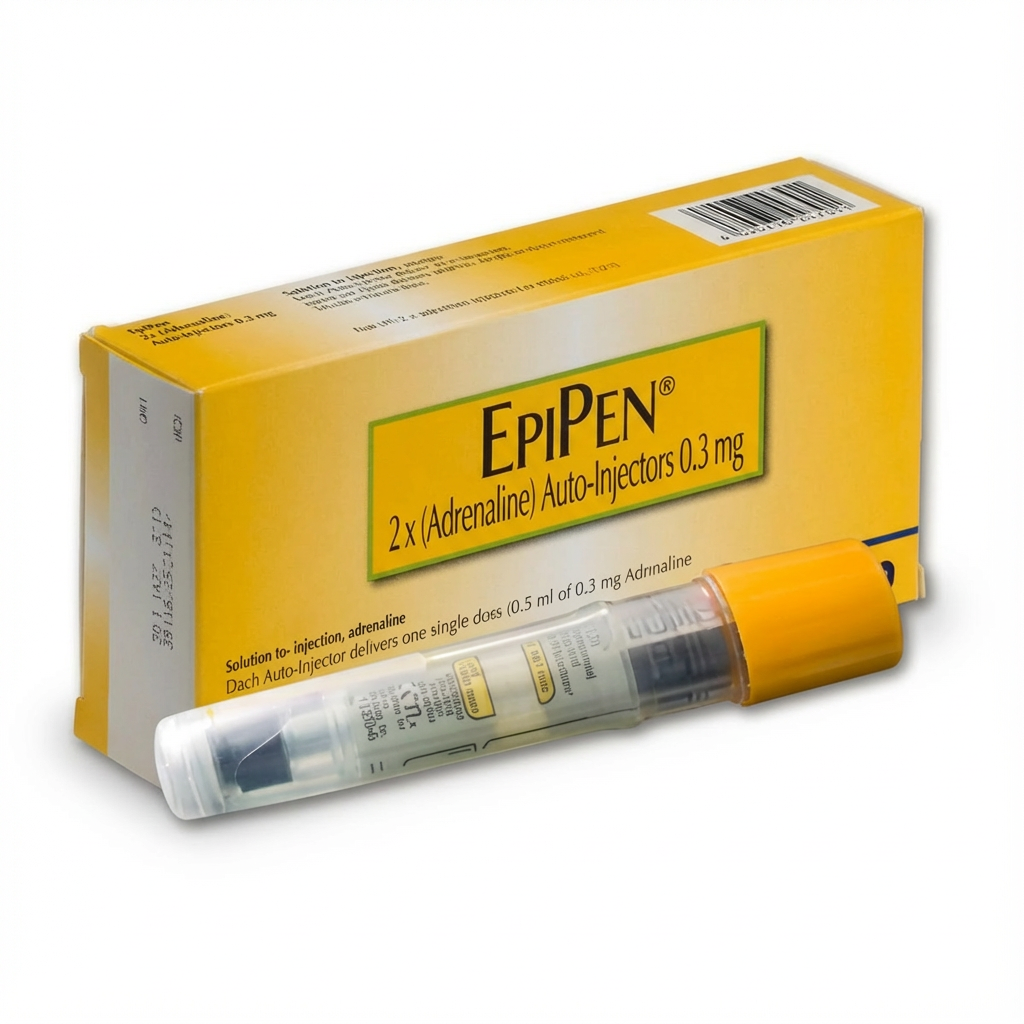
EpiPen is a life-saving adrenaline (epinephrine) auto-injector designed for the emergency self-administration of a single dose during a severe, life-threatening allergic reaction known as anaphylaxis. If you have a history of severe allergies, your doctor may prescribe EpiPen as an emergency rescue medication to carry at all times.
This is a prescription-only medicine (POM). You must complete a short online consultation so that our prescriber can ensure that the treatment is suitable for you.
| Product Name: | EpiPen Adrenaline Auto-Injector |
|---|---|
| Manufacturer: | Viatris Products Limited |
| Active Ingredient: | Adrenaline (Epinephrine) |
| Administration: | Intramuscular injection (outer thigh) |
| Presentation: | Pre-filled auto-injector |
| Available Strengths: | 0.3 mg (EpiPen), 0.15 mg (EpiPen Jr) |
| Prescription Required: | Yes (POM) |
| Dosage Frequency: | Emergency use only (repeat after 5-15 min if needed) |
| Suitable for pregnancy? | Emergency use only |
| Use with alcohol: | N/A (for emergency use only) |
| Package | Dosage | Current Price | |
|---|---|---|---|
| 1 injection | 300mcg | £85.99 | |
| 2 injections | 300mcg | £171.98 | |
| 1 injection | 150mcg | £85.99 | |
| 2 injections | 150mcg | £171.98 | |
| Why two devices? It is recommended that patients are prescribed two EpiPen auto-injectors which they should carry at all times[citation:3]. Up to 20% of anaphylaxis cases require a second dose[citation:5]. | |||
| This treatment requires an online consultation for review by our medical team. The decision to supply will be based on whether our medical team are satisfied that it will be safe and appropriate. | |||
Swipe left or right to view more information
Table of Contents
- What is EpiPen?
- What is EpiPen Used For?
- Before Using EpiPen
- EpiPen Contraindications
- Special Population Considerations
- EpiPen and Other Medicines
- Pregnancy & Breastfeeding
- Driving & Machine Operation
- EpiPen Ingredients
- How to Use EpiPen
- EpiPen Dosage Guidelines
- Administration Instructions
- Missed Dose Management
- Overdose Information
- EpiPen Side Effects
- How to Store EpiPen
- EpiPen Pack Information
- EpiPen FAQs
What is EpiPen?
EpiPen is a pre-filled auto-injector device containing a sterile solution of adrenaline (also known as epinephrine). It is used for the emergency treatment of severe, life-threatening allergic reactions known as anaphylaxis[citation:1].
Mechanism of Action
Adrenaline is a hormone that works rapidly to reverse the life-threatening symptoms of anaphylaxis:
- Constricts blood vessels to raise dangerously low blood pressure.
- Relaxes airway muscles to restore breathing.
- Reduces swelling in the face, lips, tongue, and throat.
- Increases heart rate to counteract slowing caused by anaphylaxis.
According to guidelines, epinephrine is the first-line treatment in all cases of anaphylaxis, as all other drugs have a delayed onset of action[citation:5].
What is EpiPen Used For?
EpiPen is indicated for the emergency treatment of severe, life-threatening allergic reactions (anaphylaxis)[citation:1][citation:3].
Common Triggers for Anaphylaxis
- Foods: Peanuts, tree nuts, shellfish, eggs, milk.
- Insect stings/bites: Bees, wasps, hornets[citation:3].
- Medications: Antibiotics (e.g., penicillin), anaesthetics[citation:3].
- Other: Exercise, allergen immunotherapy, unknown causes (idiopathic)[citation:3][citation:5].
WHEN TO USE EPIPEN - EMERGENCY WARNING
Use EpiPen IMMEDIATELY if you experience symptoms of a severe allergic reaction, such as[citation:4]:
- Trouble breathing, wheezing, or tight/scratchy throat.
- Swelling of the lips, tongue, face, or throat.
- Feeling faint, dizzy, weak pulse, or loss of consciousness.
- Severe vomiting or stomach cramps after known allergen exposure.
“If in doubt, use.” Do not delay. After using EpiPen, call 999 (or 112) and say "anaphylaxis" immediately, even if symptoms improve[citation:9]. You must still seek emergency medical help[citation:1].
Before Using EpiPen
Before being prescribed EpiPen, your doctor will conduct a thorough assessment. Inform them if you have any of the following conditions[citation:1][citation:7]:
Medical History Assessment
- Heart disease, high blood pressure, or irregular heartbeat.
- Diabetes.
- Thyroid problems (hyperthyroidism).
- Asthma or other breathing problems.
- Parkinson’s disease.
- History of depression.
- Are pregnant, planning pregnancy, or breastfeeding.
Essential Patient Education
Your doctor should[citation:3][citation:9]:
- Confirm your history/risk of anaphylaxis.
- Provide an anaphylaxis emergency action plan.
- Educate you, your family, and caregivers on proper use.
- Prescribe at least two EpiPens to carry at all times.
- Provide a trainer device for practice.
EpiPen Contraindications
CRITICAL: During a genuine anaphylactic emergency, there are NO ABSOLUTE CONTRAINDICATIONS to using EpiPen[citation:3]. The risk of death from untreated anaphylaxis far outweighs any potential risk from adrenaline.
Conditions Requiring Extra Caution
Adrenaline should be used with caution in patients with[citation:3]:
- Heart disease (may precipitate angina or arrhythmias).
- Severe hypertension (high blood pressure).
- Certain thyroid conditions.
Even with these conditions, EpiPen must still be used in an emergency.
ACCIDENTAL INJECTION WARNING
If EpiPen is accidentally injected into fingers, hands, or feet, go to the nearest A&E department immediately[citation:3]. This can cause severe loss of blood flow to the affected area and requires urgent hospital treatment.
Special Population Considerations
Children
Dosing is based on body weight[citation:3]:
- EpiPen Jr (0.15 mg): For children approximately 15-25 kg body weight.
- EpiPen (0.3 mg): For children over 25 kg body weight, and adults.
Important: If giving an injection to a young child, hold their leg firmly in place before and during injection to prevent injury[citation:1][citation:3].
Elderly Patients & Those with Other Conditions
- Elderly: May be at greater risk of adverse reactions; use if benefit justifies risk[citation:3].
- Renal/Hepatic Impairment: No specific dose adjustment for single emergency dose.
EpiPen and Other Medicines
Certain medications can interact with adrenaline. Always inform your doctor about all medicines you take[citation:1][citation:3].
Significant Drug Interactions
- Tricyclic antidepressants & MAO inhibitors: May increase the effects of adrenaline[citation:3].
- Beta-blockers (e.g., propranolol, atenolol): May reduce EpiPen's effectiveness and exacerbate anaphylaxis[citation:3].
- Thyroid hormones: May increase sensitivity to adrenaline[citation:3].
- Asthma medications (e.g., theophylline): May increase risk of irregular heartbeat[citation:3].
DO NOT STOP any regular prescription medications due to potential interactions. The risk of untreated medical conditions is greater. Discuss any concerns with your doctor.
Pregnancy & Breastfeeding
Pregnancy
USE DURING PREGNANCY: Emergency situations only[citation:3].
- Anaphylaxis during pregnancy is dangerous for both mother and baby.
- USE EPIPEN IF NEEDED – maternal and fetal survival are the priority.
- After use, immediate hospital evaluation is essential.
Breastfeeding
Adrenaline is not expected to have any effect on a nursing infant[citation:3]. Do not hesitate to use EpiPen while breastfeeding if experiencing anaphylaxis.
Driving & Machine Operation
- DO NOT DRIVE after using EpiPen, even if you feel better[citation:3].
- Adrenaline causes tremor, anxiety, dizziness, and palpitations.
- Anaphylaxis itself impairs cognitive function.
- You must be assessed in hospital first.
Guidance: Do not drive for at least 24 hours after an anaphylactic episode or until cleared by a doctor.
EpiPen Ingredients
Active Ingredient
- Adrenaline (Epinephrine): 0.3 mg per dose (EpiPen) or 0.15 mg (EpiPen Jr).
Excipients (Inactive Ingredients)
- Sodium Chloride, Sodium Metabisulphite (E223), Hydrochloric Acid, Water for Injections.
SULPHITE WARNING
EpiPen contains sodium metabisulphite, which can cause allergic reactions in sulphite-sensitive individuals. STILL USE EPIPEN DURING ANAPHYLAXIS as the risk from anaphylaxis is greater. Inform emergency responders.
How to Use EpiPen
Practice with the trainer device regularly. Each brand works differently, so know your device[citation:4].
Step-by-Step Administration[citation:1][citation:3]
- Grasp the EpiPen in your fist with the orange tip pointing downward.
- With your other hand, pull off the blue safety cap.
- Hold the orange tip near the middle of the outer thigh.
- Jab firmly into the thigh at a 90° angle. You will hear a click.
- Hold firmly in place for at least 3 seconds.
- Remove the pen. The orange needle cover will extend to cover the needle.
- Massage the injection area for 10 seconds.
- CALL 999 / 112. Say "ANAPHYLAXIS." Even if symptoms improve.
KEY POINTS
- Inject through clothing if necessary – don't waste time removing clothes.
- ONLY inject into the outer thigh – never into buttocks, hands, feet, or veins.
- If symptoms haven't improved after 5-15 minutes, use the second EpiPen[citation:3].
EpiPen Dosage Guidelines
Standard Dosage[citation:3]
- EpiPen: 0.3 mg adrenaline for adults and children over 25 kg.
- EpiPen Jr: 0.15 mg adrenaline for children 15-25 kg.
Repeat Dosing
- When: If symptoms haven't improved within 5-15 minutes[citation:3].
- Where: Inject into the opposite thigh if possible.
- More than two sequential doses should only be given under direct medical supervision[citation:1].
ALWAYS CARRY TWO EPIPENS[citation:1][citation:9]
Up to 20% of anaphylaxis cases require a second dose because symptoms persist[citation:5]. A further 20% may experience a biphasic reaction, where symptoms return hours later[citation:5]. Your doctor should prescribe two devices.
Administration Instructions
Correct Injection Site
Mid-outer thigh (anterolateral aspect)[citation:1][citation:3].
Why the thigh?
- Large muscle mass ensures good absorption.
- Minimises risk of accidental intravenous injection.
- Easy to access in an emergency.
Special Situations
- Thick subcutaneous fat: Inject with firm pressure; needle is designed to reach muscle. A second dose may be needed[citation:3].
- Self-administration: Sit down first to avoid falling if dizzy.
Missed Dose Management
EpiPen is not a regular medication – it's for emergency use only.
If You Delay Using EpiPen
- Situation: You experience anaphylaxis but hesitate to use EpiPen.
- Action: USE IT IMMEDIATELY, even if symptoms started minutes ago.
- Reason: Adrenaline is most effective when given early but still helps even if delayed.
- Warning: Delaying increases the risk of hospitalization and death.
WHEN IN DOUBT, USE EPIPEN. It's better to use it unnecessarily than to die from untreated anaphylaxis[citation:9].
Overdose Information
Accidental Injection (e.g., into fingers/hands)
- Go to A&E immediately – do not wait[citation:3].
- This can cause severe vasoconstriction (lack of blood flow).
- Hospital treatment with vasodilators may be needed.
Multiple Doses During Anaphylaxis
During ongoing anaphylaxis, the priority is to treat the reaction. However, multiple doses increase risks like severe high blood pressure or irregular heartbeat. All EpiPen use requires hospital evaluation for monitoring.
EpiPen Side Effects
Side effects are common but usually temporary. The benefits during anaphylaxis always outweigh these risks.
Common Side Effects[citation:1][citation:7]
- Fast, irregular, or "pounding" heartbeat (palpitations).
- Sweating, anxiety, nervousness, tremor (shaking).
- Nausea, vomiting, dizziness, headache, pallor (paleness).
- Weakness, breathing difficulties.
Serious Side Effects (Rare)[citation:3]
- Severe injection site infections (e.g., necrotizing fasciitis).
- Worsening of angina or severe heart rhythm problems.
- Stress cardiomyopathy.
You should already be on the way to hospital after EpiPen use, where any serious side effects can be managed.
How to Store EpiPen
Storage Conditions[citation:4][citation:7]
- Temperature: Store at room temperature (Do not refrigerate or freeze).
- Light: Keep in the provided case to protect from light.
- Do not store in a car glove box due to temperature extremes.
- Keep with you or in an easily accessible place at all times.
Visual Inspection & Expiry
- Check the expiry date monthly and replace before it expires.
- The solution should be clear and colourless. Discard if it is pink, brown, or cloudy[citation:4].
- Dispose of expired or used devices at a pharmacy. Do not put in household waste.
Pack Information
Pack Sizes[citation:3]
- 1 x EpiPen Auto-injector
- 2 x EpiPen Auto-injectors (twin pack – recommended)
Note: The NHS list price for a single EpiPen 0.3 mg is £60.69, and £121.38 for a twin pack[citation:3].
Device Appearance
- EpiPen 0.3 mg: Yellow body with blue safety cap.
- EpiPen Jr 0.15 mg: Green body with blue safety cap.
- Each device comes with a carrying case.
Where Can I Buy EpiPen Online in the UK
Secure EpiPen Prescription & Next-Day Delivery Service
Order EpiPen with confidence through our UK-registered medical prescribers. We provide a convenient, confidential service for individuals with a history of anaphylaxis who need access to this life-saving emergency medication.
Our service combines strict adherence to MHRA and GPhC safety standards with discreet, fast delivery. Our clinicians ensure:
- Review of your allergy and medical history.
- Confirmation that you have previously been prescribed and trained to use an adrenaline auto-injector[citation:6].
- Prescription of the appropriate device and quantity.
This service is for obtaining emergency EpiPens for those at known risk. It does not replace emergency care during anaphylaxis or ongoing allergy management with a specialist. Always call 999 in an emergency.
EpiPen (Adrenaline) FAQs
How do I know if I need to use my EpiPen?
Use EpiPen immediately if you experience symptoms of a severe allergic reaction (anaphylaxis) after exposure to a known trigger. Key signs include trouble breathing, throat tightness, swelling of the face/lips/tongue, feeling faint, or severe vomiting[citation:4]. The official UK advice is: “If in doubt, use. Don’t delay.”[citation:9]
Can I use someone else's EpiPen in an emergency?
Yes. If someone is experiencing anaphylaxis and you have an EpiPen available, you should use it to save their life. EpiPen is designed for emergency use. After use, call 999 and inform responders it was not prescribed to that person.
What happens if I use an expired EpiPen?
An expired EpiPen may have reduced effectiveness but should still be used in an emergency if it's all you have. However, you must replace expired EpiPens immediately and check the solution monthly – discard if discoloured[citation:4].
What's the difference between EpiPen and antihistamines?
They treat different problems[citation:5]:
- Antihistamines (like Piriton): Treat mild allergies (itchy rash, sneezing). They are too slow and weak for anaphylaxis.
- EpiPen (Adrenaline): Treats life-threatening anaphylaxis (breathing problems, throat swelling, shock). It is the first-line emergency treatment.
Never substitute antihistamines for EpiPen in a severe reaction. Use EpiPen first, then antihistamines only if recommended by emergency responders.
Can I travel with my EpiPen?
Yes, with precautions: Carry in original packaging with prescription label; bring at least two devices; keep in carry-on luggage (not checked); inform security; check airline policies; and ensure travel insurance covers anaphylaxis.
How long does EpiPen take to work?
Adrenaline starts working within 1-3 minutes, with peak effects at 5-10 minutes[citation:4]. Most people feel improvement within minutes, but the medicine starts to wear off in 20 to 30 minutes, which is why emergency medical help is always required[citation:4].
What should I do after using my EpiPen?
Follow these steps[citation:4][citation:9]:
- Call 999 immediately (say "anaphylaxis").
- Lie down with legs raised (unless breathing is difficult).
- Use your second EpiPen if no improvement in 5-15 minutes.
- Go to hospital by ambulance – never drive yourself.
- Stay lying down and stay in hospital for observation (typically 4-6 hours minimum).
Can children use the adult EpiPen?
Children weighing over 25 kg should use the adult EpiPen (0.3 mg)[citation:3]. Children 15-25 kg should use EpiPen Jr (0.15 mg). In an emergency with only an adult EpiPen available, use it on any child experiencing anaphylaxis regardless of weight – some adrenaline is better than none.
How often should I practice with my trainer EpiPen?
Practice regularly (e.g., monthly) with your trainer device (available free from the manufacturer). Involve family, coworkers, and caregivers in practice sessions. Refresh training whenever you get new EpiPens or change brands[citation:9].
Will EpiPens be available in public places?
In 2021, the UK government's Commission on Human Medicines published a landmark report recommending wider access to adrenaline auto-injectors in public spaces like restaurants to help save lives[citation:9]. A public consultation and legislative change are needed before this can happen.

Medical Content Manager
Nabeel is a co-founder, and medical content manager of Chemist Doctor. He works closely with our medical team to ensure the information is accurate and up-to-date.

Medical Doctor
Dr. Talal is a GMC registered doctor and medical reviewer at Chemist Doctor. He ensures clinical accuracy and reliability across health content.

Medical Director
Usman is a co-founder, and medical director of Chemist Doctor. He leads the organisation's strategic vision, bridging clinical and operational priorities.
Review Date: 11 December 2025
Next Review: 11 June 2026
Published on: 11 December 2025
Last Updated: 11 December 2025
Obtaining your EpiPen is a simple process designed for your convenience and safety.
Complete Consultation
Fill out our brief, confidential online health questionnaire about your allergy history.
Clinical Review
A UK-registered clinician reviews your consultation to ensure safe prescribing. You may be contacted via secure message for clarification.
Prescription & Pharmacy
If approved, a private prescription is issued to our partner pharmacy, which prepares your medication.
Fast Dispatch
Your order is dispatched via your chosen delivery method in discreet, secure packaging.
Who can order an EpiPen online?
This service is typically for individuals who have already been diagnosed as at risk for anaphylaxis, have been prescribed an adrenaline auto-injector before, and have been trained in its use[citation:6]. Our clinicians will assess your suitability based on your medical history.
How do I reorder medication?
Use the login details emailed after your first order to access your patient account and reorder easily. We also send expiry reminders.
Your privacy is paramount. We ensure complete discretion at every stage of our service.
Discreet Packaging
All orders are sent in plain, unmarked outer packaging with no indication of the medical contents inside.
Secure & Encrypted Data
Your personal and medical information is protected with end-to-end encryption and stored on UK-based servers compliant with NHS Digital standards.
Private Consultations
All consultations are conducted privately by GMC-registered clinicians. Your information is never shared for marketing without your explicit consent.
Anonymous Billing
Credit card statements show a neutral descriptor with no reference to medications or Chemist Doctor.
Will my GP be informed about my order?
Only with your consent. We recommend informing your NHS GP about any medications obtained through our service for seamless care, but this is your choice.
We offer reliable delivery options to ensure you receive your medication promptly.
| Service Type | Delivery Speed | Order Cut-off | Cost |
|---|---|---|---|
| Standard Delivery | 2-3 business days | No cut-off | Free |
| Next-Day Delivery | Next business day | 3 PM (weekdays) | £3.99 |
Service Coverage: We deliver to all UK mainland addresses. Deliveries to Northern Ireland, Scottish Highlands & Islands may take 3-4 working days.
Discreet Packaging: All medications are sent in plain, unmarked packaging.
Do I need to sign for the delivery?
Yes, most deliveries require a signature. You can pre-authorise the courier to leave your parcel in a safe place if you won't be home.
Do you deliver on weekends or bank holidays?
We dispatch orders Monday–Friday. We do not ship on weekends or UK bank holidays. Saturday delivery may be available for an additional fee.
Credit/Debit Cards
Visa, Mastercard, Maestro, American Express
Secure 3D authentication
Google Pay/Apple Pay
Quick checkout using your mobile payment methods
Enhanced security with tokenisation
Pay in 3 by Klarna UK
3 interest-free payments
Pay in 3 instalments
Subject to eligibility checks
We use SSL encryption and PCI DSS compliance to secure transactions. Learn more in our Privacy Policy.
How long do refunds take to process?
Card payments: Refunds appear in 3–5 days.
Klarna payments: Refunds are processed through Klarna and will be adjusted across your remaining instalments.
Why was my order declined?
Declined orders are not charged. Card authorisations release funds within 3–5 days (contact your bank for details).
Can I return prescription medication?
No. UK law prohibits returns of dispensed prescription treatments for safety reasons.
How does Pay in 3 by Klarna UK work?
Pay in 3 by Klarna UK allows you to split your purchase into 3 equal payments. The first payment is made at checkout, with the remaining two payments automatically collected every 30 days. There are no interest or fees when you pay on time. Klarna UK is a fully regulated credit provider.
Reviews for this specific service are being updated. Please check back soon.
Have you used our services? Share your experience